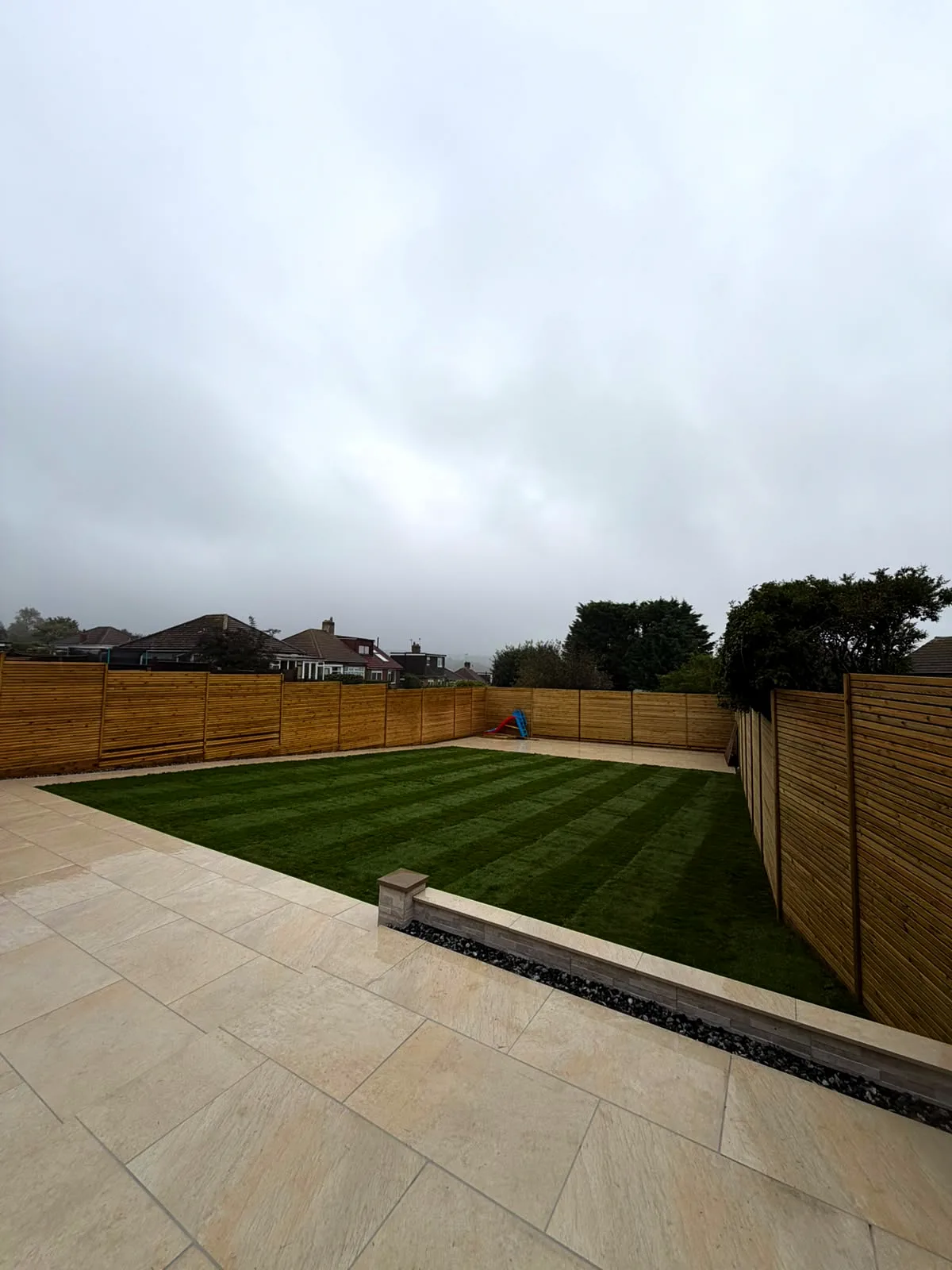
Why people choose porcelain
- Low maintenance: it does not need sealing and is easy to keep clean
- Frost resistant and hard wearing, so it suits the British weather
- Consistent colour and finish, in stone, slate and timber looks
- Slim, large slabs that make a garden feel bigger and flow from the house
How we lay it
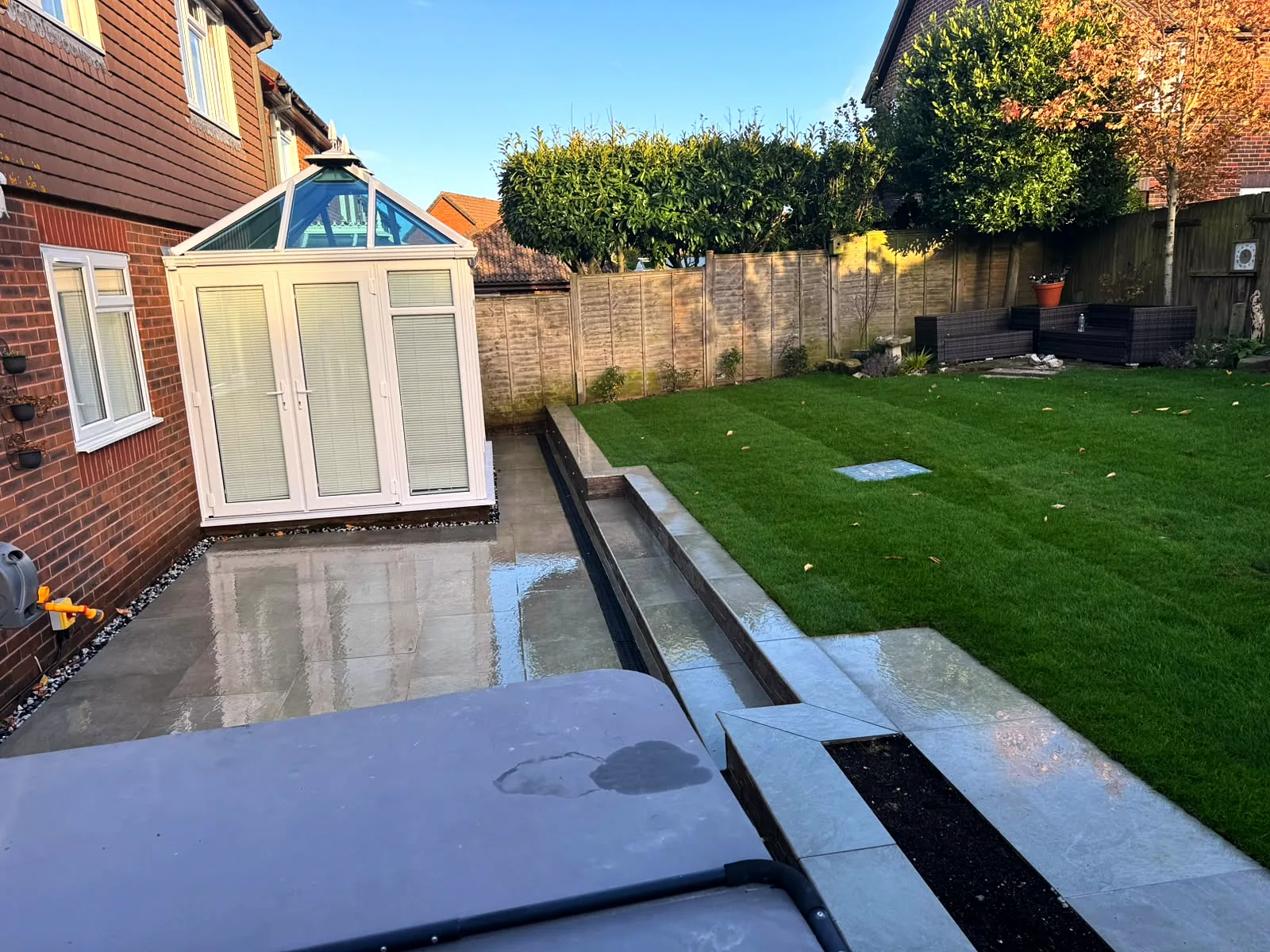
Porcelain is unforgiving. Uneven foundations show up in the finished surface, and a bad cut cannot be hidden. We prepare the base to tight tolerances, lay slabs on a bonded system suited to the product, and set the joints and falls so the surface drains cleanly.
Setting out
We plan the layout so cuts fall where they are least visible and the pattern lines up with doors and walls.
Cutting
Slabs are cut with the right equipment for clean, sharp edges and neat details around drains and steps.
Pointing
Joints are filled with a product suited to porcelain for a neat finish that lasts.
Slab thickness and type matter. Outdoor porcelain is typically around 20 mm thick. We advise on which slabs suit your patio, path or driveway before you order.
Matching the rest of the garden
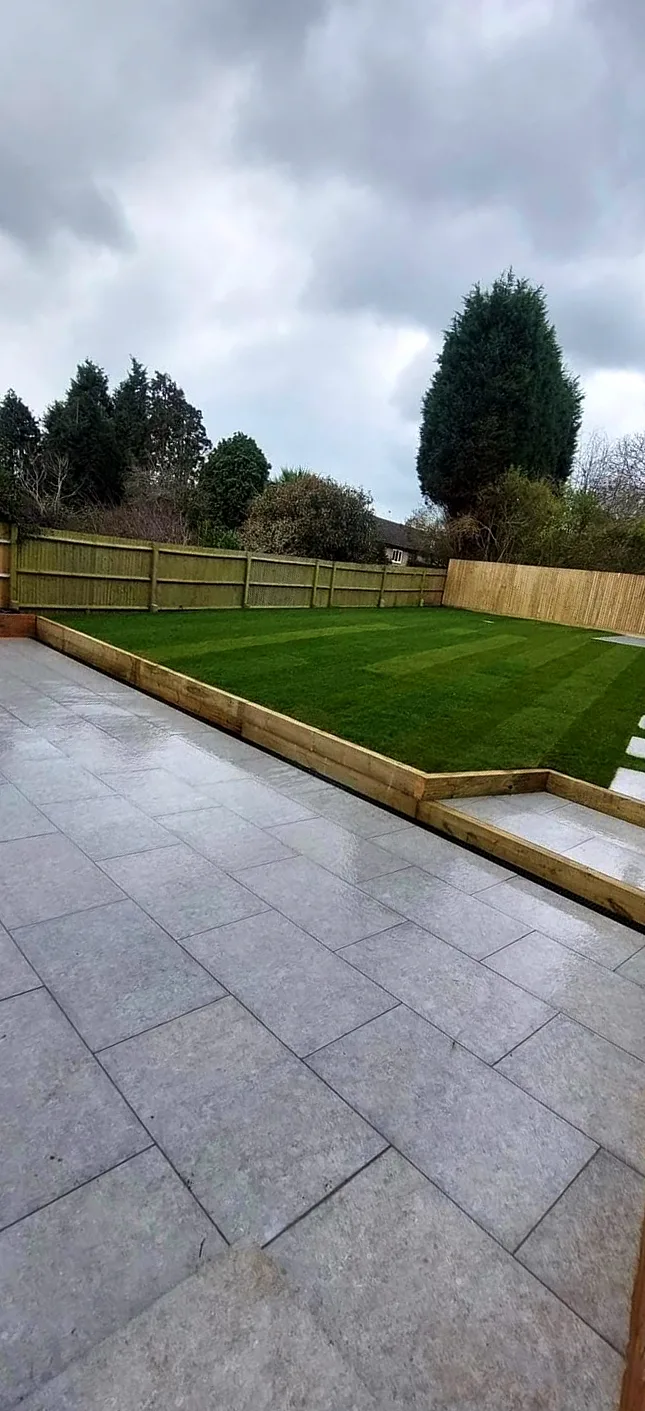
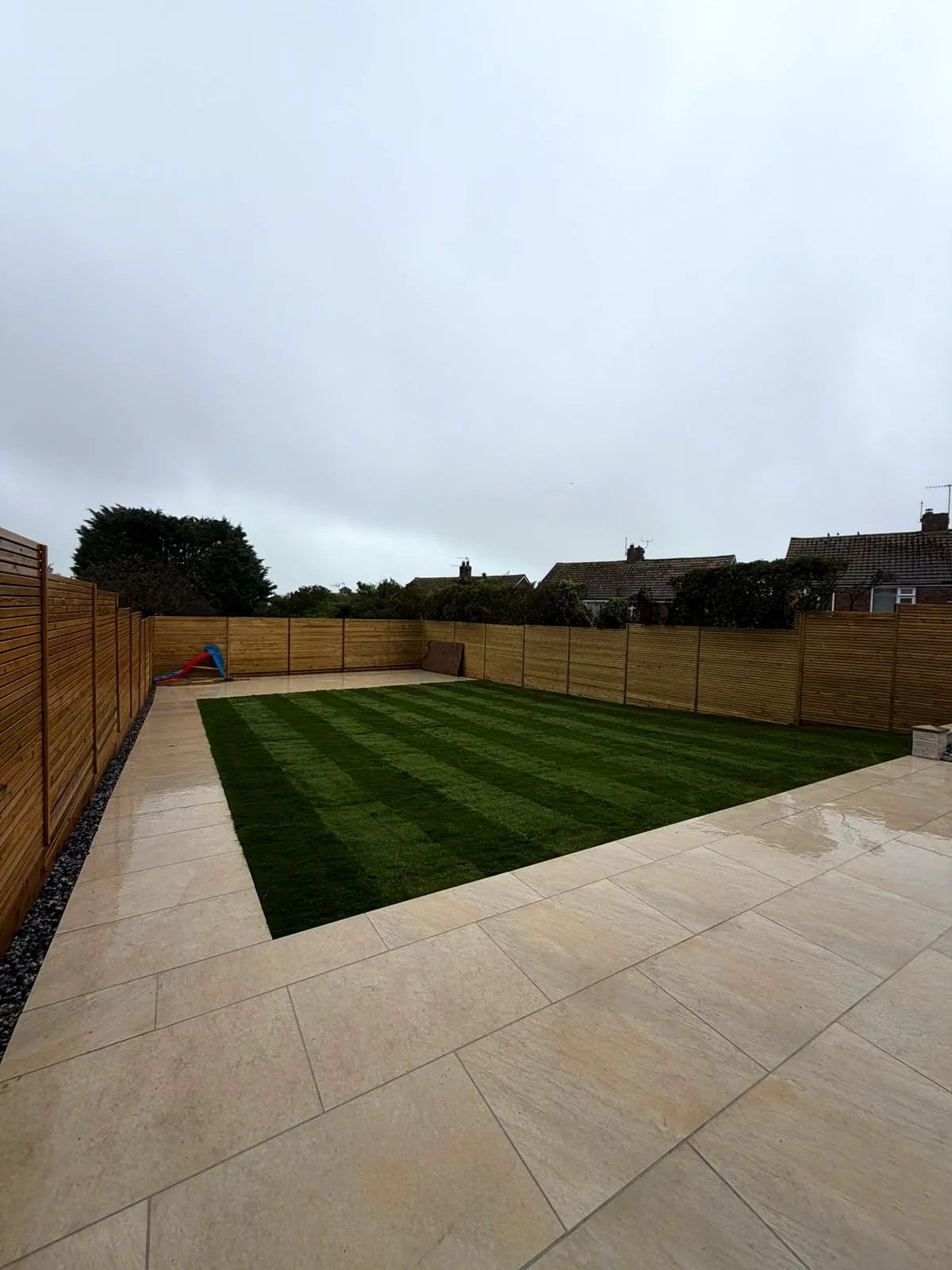
Porcelain pairs well with striped turf, timber sleeper beds and slatted fencing. We can plan the whole garden so the materials work together.
Last updated